

AN 'AMAZING' CONCLUSION
THROUGH THE TREES took a stab at a sing-a-long of a tune sung 10 million times yearly. You probably know it. | February 10, 2026
CLICK TO HEAR CONCERT CLIP
VIDEO & AUDIO FOOTAGE: Jozlend Tucker and Randy Melton. VIDEO EDITING: Douglas John Imbrogno and AmpMediaProject. | NOTE: You can also view at YouTube.
IT WAS OUR ENCORE, the last song of the night for THROUGH THE TREES, at its Jan. 10, 2026, ‘Branching Out’ showcase concert in West Virginia’s capital city of Charleston, a show that featured some very special musical guests. The founding member of the TREES — Ray Garnett (viola, violin); Jim Probst (lap dulcimer, cajone); and Douglas John Imbrogno (guitar, lead vocals) — were joined on stage at Unity of Kanawha Valley by guests Colleen Anderson (vocals); Jeff Haught (electric piano); Robin Kessinger (flatpick guitar, Ron Sowell (harmonica, vocals); and Kyle Vass (upright bass, vocals). The video above features an excerpt from the last song of the night, ‘AMAZING GRACE,’ which has had a long and, well, pretty amazing life as a tune that took birth in the Christian tradition yet has had multiple lives from crossing over into the secular world.
TREES lead singer Douglas John Imbrogno mused about the significance and resonance of the song in a post at his web journal, WestVirginiaVille.substack.com. Below is an excerpt from that piece on the roots of a song sung many millions of times a year, according to the biographer of the man who wrote its lyrics, John Newton.

CLICK TO READ ‘AN ‘AMAZING THING’ at WestVirginiaVille.substack.com
An ‘Amazing Grace’ Primer
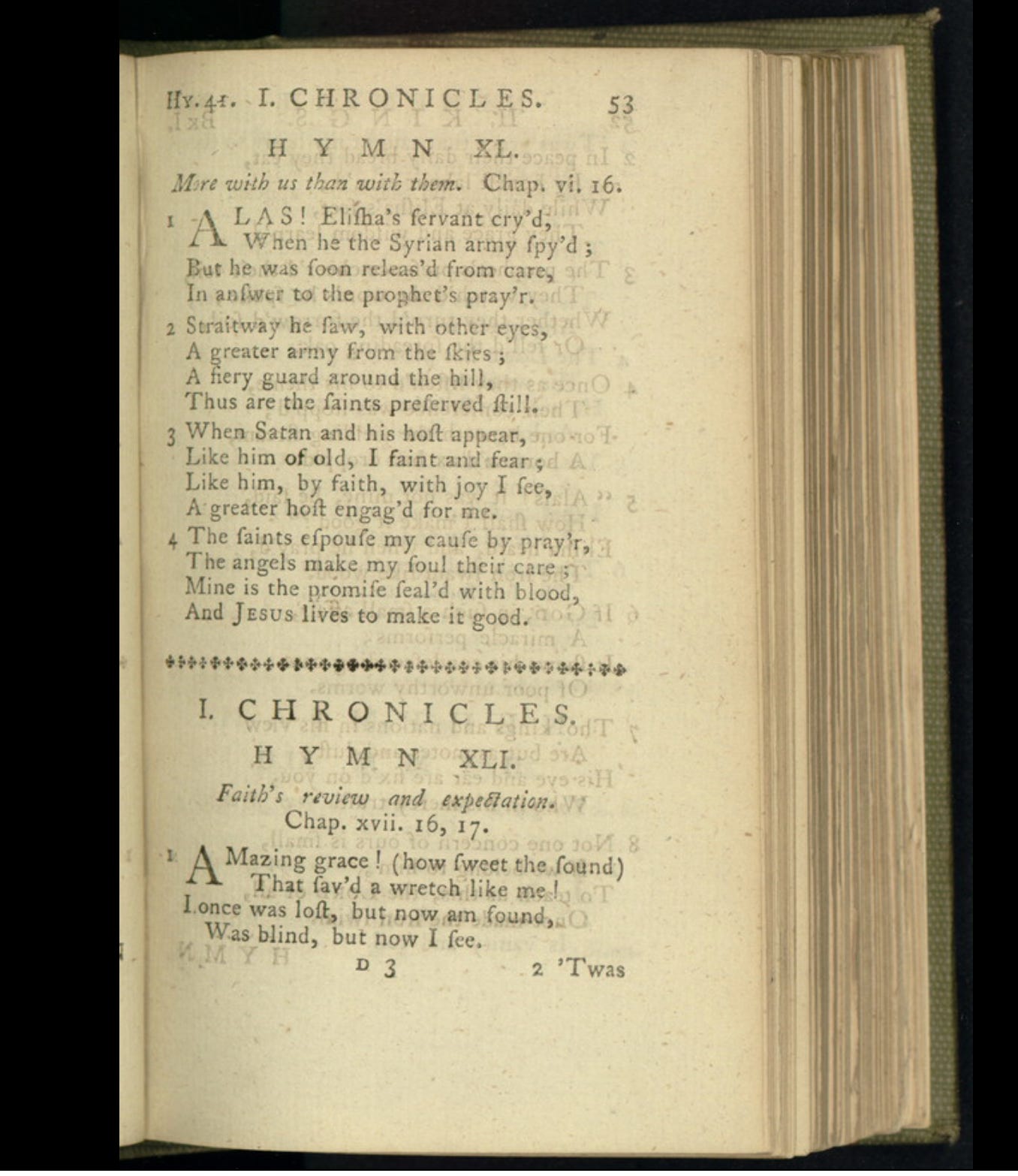
Source Material from this Wikipedia page.
“Amazing Grace“ is a Christian hymn written in 1772 and published in 1779 by English Anglican clergyman, abolitionist, and poet John Newton. It is possibly the most sung and most recorded hymn in the world.
Newton was pressed into service with the Royal Navy, and after leaving the service, he became involved in the Atlantic slave trade. In 1748, a violent storm battered his vessel off the coast of County Donegal, Ireland, so severely that he called out to God for mercy. While this moment marked his spiritual conversion, he continued slave trading until 1754 or 1755, when he ended his seafaring altogether. Newton began studying Christian theology and later became an abolitionist.
Ordained in the Church of England in 1764 … he began to write hymns with poet William Cowper. “Amazing Grace” was written to illustrate a sermon on New Year’s Day of 1773. It is unknown if there was any music accompanying the verses; it may have been chanted by the congregation. It debuted in print in 1779 in Newton’s and Cowper’s Olney Hymns, but settled into relative obscurity in England.
In the United States, “Amazing Grace” became a popular song used by Baptist and Methodist preachers as part of their evangelizing, especially in the American South of the early 19th century. It has been associated with more than 20 melodies. In 1835, American composer William Walker set it to the tune known as “New Britain“ in a shape note format; this is the version most frequently sung today.
American historian Gilbert Chase writes that [‘Amazing Grace’] is “without a doubt the most famous of all the folk hymns” and Jonathan Aitken, a Newton biographer, estimates that the song is performed about 10 million times annually.It has had particular influence in folk music, and has become an emblematic Black spiritual.
[The song’s] universal message has been a significant factor in its crossover into secular music. “Amazing Grace” became newly popular during the 1960s revival of American folk music, and it has been recorded thousands of times during and since the 20th century.